
Alaska Police Brutality Lawyer
Police brutality can leave deep, lasting impacts, but victims have legal options to hold officers accountable for misconduct. Police Brutality Center connects victims with skilled police brutality lawyers who will fight for your rights and help you seek both compensation and accountability.
Attorneys that work with Police Brutality Center may be able to assist you.
"*" indicates required fields
Content Last Updated: March 23, 2026
According to the Police Scorecard, a project from criminal justice reform group Campaign Zero, Alaska’s police departments have an overall rating of 42 out of 100, scoring just 18% for accountability and 40% for police violence. In higher-rated states, officers are held more accountable, use less force, and policing costs are lower.
If police have violated your constitutional rights, a civil rights lawsuit can help you hold officers accountable and seek compensation for the harm you’ve suffered. Our legal partners work on a contingency-fee basis and provide free consultations. Contact us today to take the first step toward justice.
How an Alaska Police Brutality Lawyer Can Help You
If police misconduct has affected you, an Alaska civil rights attorney can provide guidance and representation to protect your rights and pursue justice by doing the following:
- Case evaluation: A lawyer will listen carefully to your experience and advise you of your legal options.
- Investigation and evidence collection: A lawyer will investigate and gather body camera footage, dash cam video footage, witness statements, and medical records to support your claim.
- Filing complaints: Complaints can be submitted to police internal affairs units, the U.S. Department of Justice Civil Rights Division, and other relevant agencies.
- Filing federal civil rights lawsuits: You may be entitled to take action under 42 U.S.C. § 1983 to hold officers or agencies accountable for rights violations and wrongful deaths.
- Fight back against police immunity defenses: An experienced civil rights attorney can counter legal arguments designed to shield officers from accountability.
- Settlement negotiations: A skilled lawyer will negotiate for a settlement that fully and fairly compensates you for your losses
- Litigation and trial: A civil rights attorney will litigate your case and, if necessary, take your case to trial and advocate for your best interests.
Connect With Our Experienced Attorneys
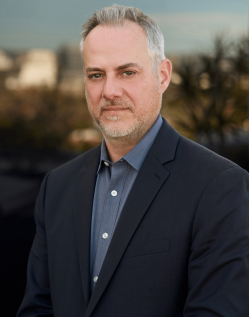
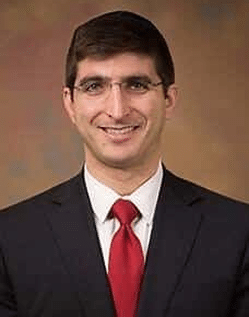
Police Brutality Center is proud to partner with Alex Straus, Chair of the Civil Rights Department at Milberg PLLC, and Solomon Radner at Radner Law Group to help victims of civil rights abuses.
Filing a Civil Rights Claim in Alaska
Navigating a civil rights claim in Alaska requires careful and timely action. To protect your rights and build a strong case, take these essential steps:
- Seek immediate medical attention: Getting care right away is crucial for your health and safety. Prompt treatment can prevent complications and create clear documentation of injuries that supports your case.
- Document everything: Keep detailed records of the incident. Photos, witness statements, and medical reports all strengthen your case.
- Get legal help: An attorney can advise you throughout the process, handle all the legal details, file your lawsuit on time, and fight for the compensation and justice you deserve.
- Report police misconduct: Submit complaints directly to the department or agency involved, and consider reporting to relevant agencies such as the Alaska Department of Public Safety.
- File a lawsuit: Your attorney can help you formally file a lawsuit seeking justice and compensation for the harm you endured.
Statute of Limitations for Police Brutality Cases in Alaska
Each state sets its own deadline, or statute of limitations, for filing a Section 1983 civil rights claim. In Alaska, claims involving personal injury, wrongful death, false imprisonment, assault, or battery usually must be filed within two years of the date of the incident.
Filing your lawsuit on time is critical because the court can reject your claim if it’s late. Acting promptly ensures you still have a chance to seek justice and compensation.
Common Types of Compensation in Police Misconduct Cases
When pursuing a claim for police brutality and misconduct, you can seek compensation to cover both financial losses and the personal impact of the experience. Recoverable damages fall into the following categories:
- Economic damages: These cover the measurable financial losses, such as medical bills, lost wages, reduced future earning potential, financial support lost due to a family member’s death, and funeral expenses.
- Non-economic damages: These compensate for the more subjective impacts of the misconduct on your life, such as emotional distress, physical pain and impairment, disfigurement, disruption to daily life, and loss of companionship.
Alaska law caps the non-economic damages recoverable in personal injury and wrongful death cases, but there is no limit on economic damages. A lawyer can carefully assess the financial and emotional impact of your case, determine its overall value, and develop a strategy to pursue the maximum compensation available.
Police Misconduct and Civil Rights Laws in Alaska
Police misconduct in Alaska occurs when a law enforcement officer, acting or claiming to act in their official capacity, violates a person’s constitutional rights. Such behavior includes the use of excessive force, unjustified shootings, racial profiling, false arrests or detentions, and deaths caused by unlawful actions.
Under Section 1983 of the federal Civil Rights Act of 1871, individuals can seek to hold government employees and officials personally liable for violating their constitutional rights, including the following:
- Fourth Amendment: Safeguards citizens against unreasonable searches and seizures
- 14th Amendment: Prohibits the deprivation of life, liberty, or property without due process of law
At the state level, Alaska has waived its sovereign immunity for certain tort claims, though some exceptions still apply. Under state law, state and local government employees can still be held personally liable if their actions or inactions are willful, reckless, intentional, grossly negligent, or malicious.
Alaska Police Incidence of Violence and Use of Force
Data from the Police Scorecard shows that law enforcement killed 68 people with the use of deadly force in Alaska between 2013 and 2023.
Use-of-force data also reveals notable trends during this time. The use of less-lethal force, such as tasers, impact weapons, chemical sprays, and K9 deployments, rose sharply in 2020. That year saw 402 incidents, compared with 64 incidents reported in 2019. Although these uses have declined since 2020, they remain higher than levels reported in 2019 and earlier years.
Civilian complaints provide another perspective on police conduct. Between 2016 and 2022, civilians filed 2,808 misconduct complaints, with 14% ultimately resolved in their favor.
Federal Civil Rights Investigations of Individual Officers in Alaska
Federal civil rights investigations in Alaska have recently led to criminal charges against officers accused of violating constitutional rights.
In 2020, Conelius A. Pettus Jr., then with the Anchorage Police Department, was indicted on state and federal charges related to an alleged assault in September 2019. Reports say that while delivering bicycle citations, Pettus snatched a phone from the victim and, as the situation escalated, allegedly punched the victim in the jaw and kicked him in the groin. Charges were dropped in 2023 after Pettus agreed not to seek law enforcement employment in any U.S. state or territory.
In 2025, two Alaska State Troopers were indicted on federal civil rights charges stemming from a May 2024 incident. According to the U.S. Department of Justice, troopers Joseph Miller and Jason Woodruff allegedly tased, struck, kicked, and released a police dog on the victim without legal justification, causing injuries.
Reported Police Brutality Cases in Alaska
Reports of police brutality in Alaska provide insight into patterns of misconduct and their lasting effects on civilians. Below are some notable cases:
Bethel Police Officers’ Use of Force
In 2025, the City of Bethel agreed to pay $10 million to settle two lawsuits accusing Bethel officers of using excessive force.
One lawsuit alleged that a December 2023 assault by Officer Jonathan Murphy left a victim with permanent brain damage. In February 2026, while serving as Chief of Police in Diamond City, Arkansas, Murphy was convicted by a Bethel jury in connection with the December 2023 assault.
The second lawsuit claimed that Bethel officers used excessive force and unlawfully arrested Nicholas Kerr while responding to a report of suspicious activity involving a parked vehicle in October 2023.
According to reports, body camera footage showed Kerr apparently sleeping in the back seat when officers arrived. After putting on his shoes, officers pulled him out of the vehicle. While pinned under the weight of an officer and handcuffed, one of the officers allegedly threatened to tase him. Per reports, officers pepper-sprayed Kerr after he complained about difficulty breathing.
$11.5m Settlement for Wrongful Conviction
In 2025, the city of Fairbanks agreed to pay $11.5 million to settle a wrongful conviction lawsuit filed by Marvin Roberts, one of the so-called “Fairbanks Four.” Roberts spent nearly 18 years in prison for a 1997 murder he did not commit.
Roberts, an Athabascan man, consistently maintained his innocence, claiming that police misconduct and racial bias contributed to his wrongful conviction alongside three other Indigenous men. In 2015, his conviction was overturned after state troopers’ independent review found that the Fairbanks Police Department’s investigation was poorly conducted and lacked any evidence linking the four men to the crime.
Contact an Experienced Alaska Police Brutality Lawyer
If police officers use unnecessary or excessive force, they should be held accountable, and victims deserve compensation for their suffering. If you or someone you care about has experienced police brutality in Alaska, Police Brutality Center is here to help.
We can connect you with our legal partners, who have years of experience litigating federal cases in over two dozen states. Solomon Radner of Radner Law Group is part of our team dedicated to pursuing justice for victims.
Our legal partners work on a contingency fee basis and offer free consultations, allowing you to take your first steps toward justice without worrying about financial risk.
Contact us today to get the legal help you need.